
The debate over diversity in STEM should not be about choosing between opportunity and equality. It should be about making sure every student has a fair opportunity to pursue both. We can only continue to diversify those equipped with emerging STEM skills, therefore positioning them for careers of the future, by continuing to level the playing field in terms of opportunity.
A recent article from The College Fix, “DOJ Says Federal Programs to Increase Racial Minorities in STEM Are Unconstitutional,” highlights a growing national debate over how government and educational institutions should address racial disparities in science, technology, engineering and mathematics.
The issue raises an important question: Can we work to expand participation in STEM without violating anyone’s rights? As an organization whose mission has been exactly this for more than two decades, the answer is clearly yes.
In fact, focusing on equal access will undoubtedly be one of the most effective ways to encourage a stronger, more diverse STEM workforce while respecting the principle that students should be judged as individuals rather than by their backgrounds.
Equal Access Is Different From Equal Outcomes
There is an important distinction between making sure students have access to an opportunity and guaranteeing that a particular group achieves a particular outcome.
Equal access means that students should have the information, resources, preparation, technology, and encouragement necessary to compete for opportunities. It can mean providing tutoring, mentorship, career counseling, STEM camps, internships, technology access and exposure to careers that students may not have considered.
None of those efforts requires an institution to decide that one student deserves an opportunity more—or less—because of race. However, access is not provided equally across schools or districts. Higher-income families tend to live in similar areas; therefore those schools are more financially equipped to meet those needs. That’s why supplemental services like the ones we provide at C-STEM are so important.
In addition, students often need to develop skills over many years before they are prepared for advanced coursework, college programs or STEM careers. Ensuring equal access to STEM education from early age helps put this into motion.
Addressing Barriers Across the Student Population
To serve all students with the STEM preparation we need, educators should be asking what barriers are preventing students from having a genuine opportunity to compete.
For some students, the barrier may be a lack of access to computers or reliable internet. For others, it may be limited exposure to STEM careers, a shortage of advanced math and science courses, inadequate academic support, or simply not knowing that certain careers exist. Many of these also point to a lack of updating resources as STEM and technology continue to rapidly evolve.
Addressing those barriers is not discrimination. It is an investment in opportunity.
A school can provide additional math tutoring to students who need it. A nonprofit can host a robotics program in a community where students have limited access to STEM activities. A company can offer internships and career education to high school students. A college can conduct outreach in schools that historically send few students into STEM fields.
These approaches expand the pool of students who are prepared to pursue opportunities that generations before them could not.
Opportunity Should Not Depend on Knowing the Right People
One of the greatest challenges facing STEM education is that opportunity is not always evenly distributed. Students whose parents work in engineering, technology, or science may grow up understanding what those careers look like. They may know which courses to take, which colleges offer strong programs and where to find internships.
Other students may have the same potential but never receive that information. This is where equal-access initiatives can make an enormous difference.
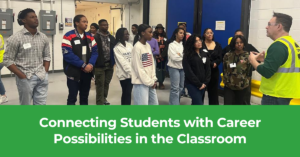
C-STEM and similar organizations can help introduce students to STEM careers, provide hands-on learning experiences, and show young people how the skills they learn in school connect to real-world jobs.
The goal is not to guarantee a particular result. The goal is to make sure students have a real opportunity to earn that result.
The Constitution and the Principle of Equal Treatment
The Justice Department’s August 2026 Office of Legal Counsel opinion regarding National Science Foundation programs concluded that certain programs that allocate federal STEM benefits based on race or sex violate the Constitution’s equal-protection guarantee. The opinion follows the Supreme Court’s 2023 decision in Students for Fair Admissions v. Harvard, which rejected the use of racial classifications in college admissions.
That does not mean efforts to expand STEM participation must stop. It means those efforts may need to be designed differently. Females, Black, Hispanic, and other groups are statistically underrepresented in STEM … still today, after decades of dedicated programs to help level the playing field.
To continue to make sure every student has equal access to STEM, we may need to look at program design differently. However, this is not a time to pull back on our efforts. In fact, we need to dig in more than ever.
Build a Bigger Pipeline, Not a Different Set of Rules
If the country wants more engineers, scientists, computer programmers, mathematicians and technology professionals, the answer is to build a stronger STEM pipeline.
That has to start early.
Students should have access to quality science and mathematics education. They should have opportunities to experiment, build, code, solve problems and work with technology. They should meet STEM professionals and learn about careers they may never have encountered otherwise.
Schools should also identify students who demonstrate interest and potential and help them develop the skills necessary to succeed. This approach benefits everyone.
A student who receives additional tutoring is not being given a job. A student who participates in a robotics program is not being guaranteed admission to an engineering college. A student who receives career mentoring is not being promised a STEM career.
They are being given something more fundamental, a chance to take full advantage of the STEM opportunities of the future.
A Stronger STEM Future Starts With Access
The goal of increasing participation in STEM should not be abandoned because some methods of pursuing that goal raise constitutional concerns.
Instead, we should become more creative about how we expand opportunity.
We can invest in schools. We can expand STEM education. We can provide mentorship. We can make technology available to students who lack it. We can introduce young people to STEM careers earlier. We can partner with businesses to provide internships and real-world experiences.
And we can do all of this while maintaining a simple principle:
Every student deserves the opportunity to compete, learn and succeed without being advantaged or disadvantaged because of race, income, disability, or any other factor.
Equal access does not mean ignoring differences in students’ circumstances. It means addressing the barriers that stand between students and opportunity in ways that respect every student’s individual rights.
For the future of STEM, that may ultimately be the most important goal of all—not creating equal outcomes, but creating genuinely equal opportunities to achieve them.